📝 Editor's Note
The Kepler mission has always been one of my favorite space endeavors. It spent nearly a decade alone in space, fundamentally changing how we understand the cosmos. While writing this piece, I re-watched its launch documentary and felt that same rush of excitement all over again.
— Admin
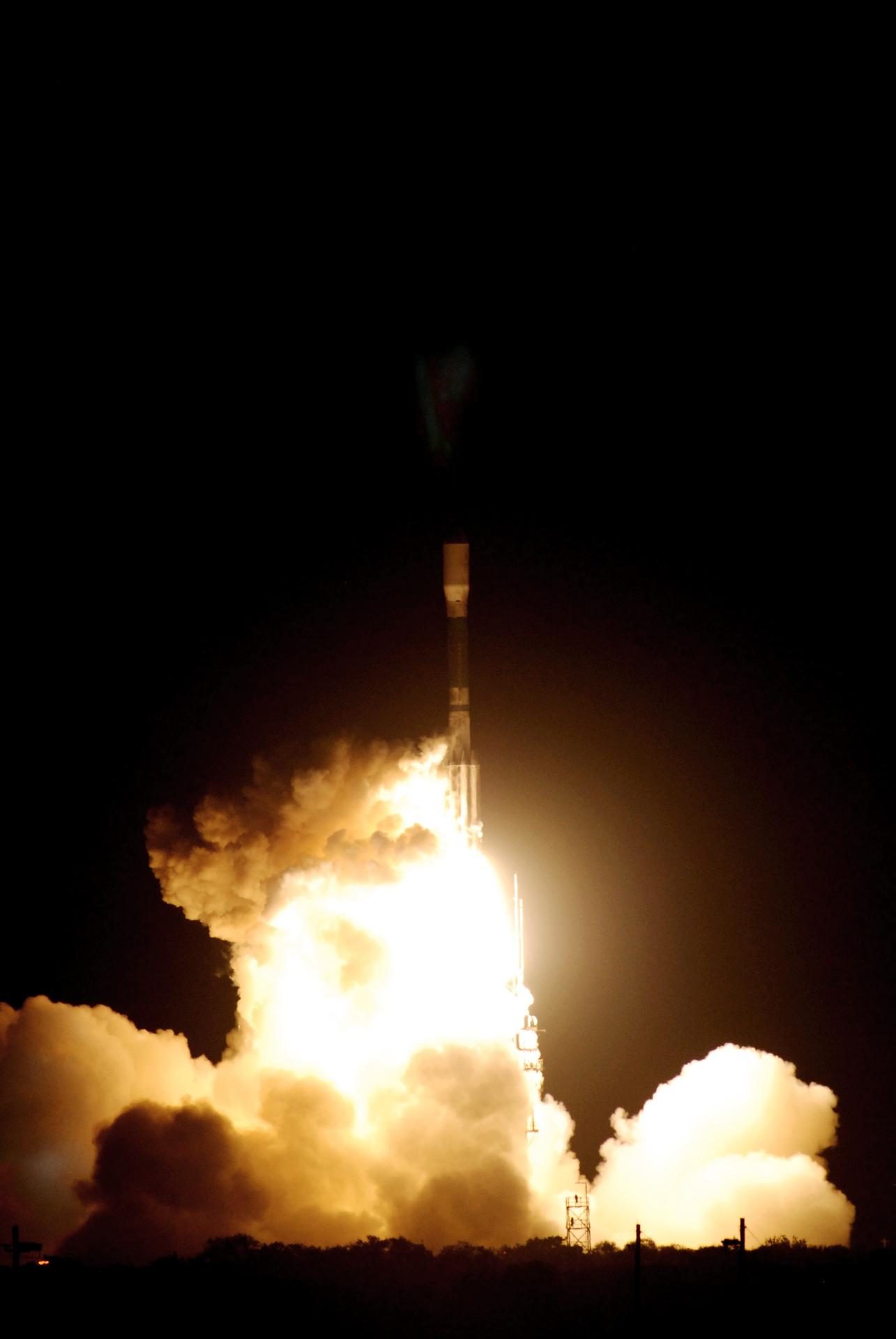
On a clear March morning in 2009, a Delta II rocket roared into the Florida sky carrying one of humanity's most ambitious scientific instruments: the Kepler Space Telescope. Named after Johannes Kepler, the 17th-century astronomer who first described the laws of planetary motion, this remarkable spacecraft would go on to fundamentally transform our understanding of the universe and our place within it.
A New Way to Find Worlds
Before Kepler, astronomers knew of only a handful of exoplanets — worlds orbiting stars other than our Sun. Discovering them required painstaking, star-by-star observations using specialized instruments on large ground-based telescopes. Kepler changed the game entirely by employing the transit method: a simple but powerful technique that detects planets by measuring the tiny dip in a star's brightness when a planet passes in front of it.
The concept is elegantly straightforward. Imagine watching a distant streetlamp from far away. If a small moth flies between you and the lamp, the light dims by an imperceptible fraction. Scale that up to stars and planets, and you have the transit method. A Jupiter-sized planet crossing a Sun-like star blocks about 1% of the light. An Earth-sized planet? Just 0.008% — a change so small that only the most sensitive instruments could detect it.
Kepler was designed to detect exactly these minuscule variations. Equipped with a 0.95-meter primary mirror and a suite of 42 CCD detectors (the largest ever flown in space at the time), the telescope could measure stellar brightness with a precision of about 20 parts per million. This extraordinary sensitivity allowed it to identify planets as small as Earth orbiting distant stars.
Monitoring 150,000 Stars
Unlike most telescopes that observe one target at a time, Kepler was a staring machine. From its vantage point trailing Earth in an orbit around the Sun, it continuously monitored a single patch of sky in the constellation Cygnus, keeping its eyes fixed on approximately 150,000 stars simultaneously. For nearly four years, Kepler collected an uninterrupted stream of brightness measurements, creating one of the richest astronomical datasets ever assembled.
This approach was critical because the transit method requires repeated observations. A planet transits its star regularly — once per orbit — and catching multiple transits confirms the signal is real rather than a random fluctuation or instrumental artifact. For a planet like Earth, which orbits the Sun once per year, this means waiting years. Kepler's continuous staring was essential for finding long-period planets in habitable zones.
A Golden Age of Discovery
The results exceeded all expectations. During its primary mission from 2009 to 2013, Kepler discovered 2,335 confirmed exoplanets — more than all the exoplanets found before its launch combined. The telescope revealed an astonishing diversity of planetary systems: hot Jupiters orbiting scorchingly close to their stars, compact systems of multiple Earth-sized worlds, and planets orbiting binary star systems like fictional Tatooine.
Among Kepler's most important contributions was demonstrating that Earth-sized planets in habitable zones are common. Before Kepler, we didn't know if our Solar System's arrangement — rocky planets close in, gas giants farther out — was typical. Kepler showed that planets come in every conceivable configuration, and that small, potentially habitable worlds are among the most common types in our galaxy.
The Foundation for K2-18b
While K2-18b was technically discovered during Kepler's extended K2 mission rather than its primary mission, the telescope's initial success is inseparable from that later finding. Kepler proved that the transit method worked, developed the operational expertise, and built the scientific case for continued exoplanet surveys. Without Kepler's pioneering achievements, the K2 mission — and the discovery of K2-18b — would never have happened.
The spacecraft itself, launched on a budget of roughly $600 million, delivered a return on investment that is nearly incalculable. Each of those thousands of discovered planets represents a new data point in our quest to understand planetary formation, atmospheric chemistry, and ultimately, whether life exists elsewhere in the cosmos.
Legacy and Impact
Kepler's primary mission ended in 2013 when the second of four reaction wheels failed, but its legacy continues to shape exoplanet science. The telescope's data archive remains one of the most valuable resources in astronomy, with new discoveries still being made by researchers mining its observations. The Kepler Input Catalog, a database of stars targeted by the telescope, is used by researchers worldwide.
More importantly, Kepler set the stage for everything that followed. The K2 mission extended Kepler's life, the TESS mission (launched in 2018) continues the all-sky exoplanet survey, and the James Webb Space Telescope is now characterizing the atmospheres of Kepler's most exciting discoveries — including K2-18b. In this sense, the Kepler Space Telescope is not merely a historical instrument but the foundational pillar upon which modern exoplanet science is built.
The stars Kepler watched in Cygnus still shine, still host their hidden worlds. And among those worlds, 124 light-years away, a small blue planet called K2-18b waits patiently for us to learn its secrets — a world that would not have been found without the legendary Kepler Space Telescope.