📝 Editor's Note
When Kepler broke down in 2013, many thought it was the end. But the engineers refused to give up, using sunlight pressure to bring it back to life. That never-say-die spirit deeply resonated with me.
— Admin
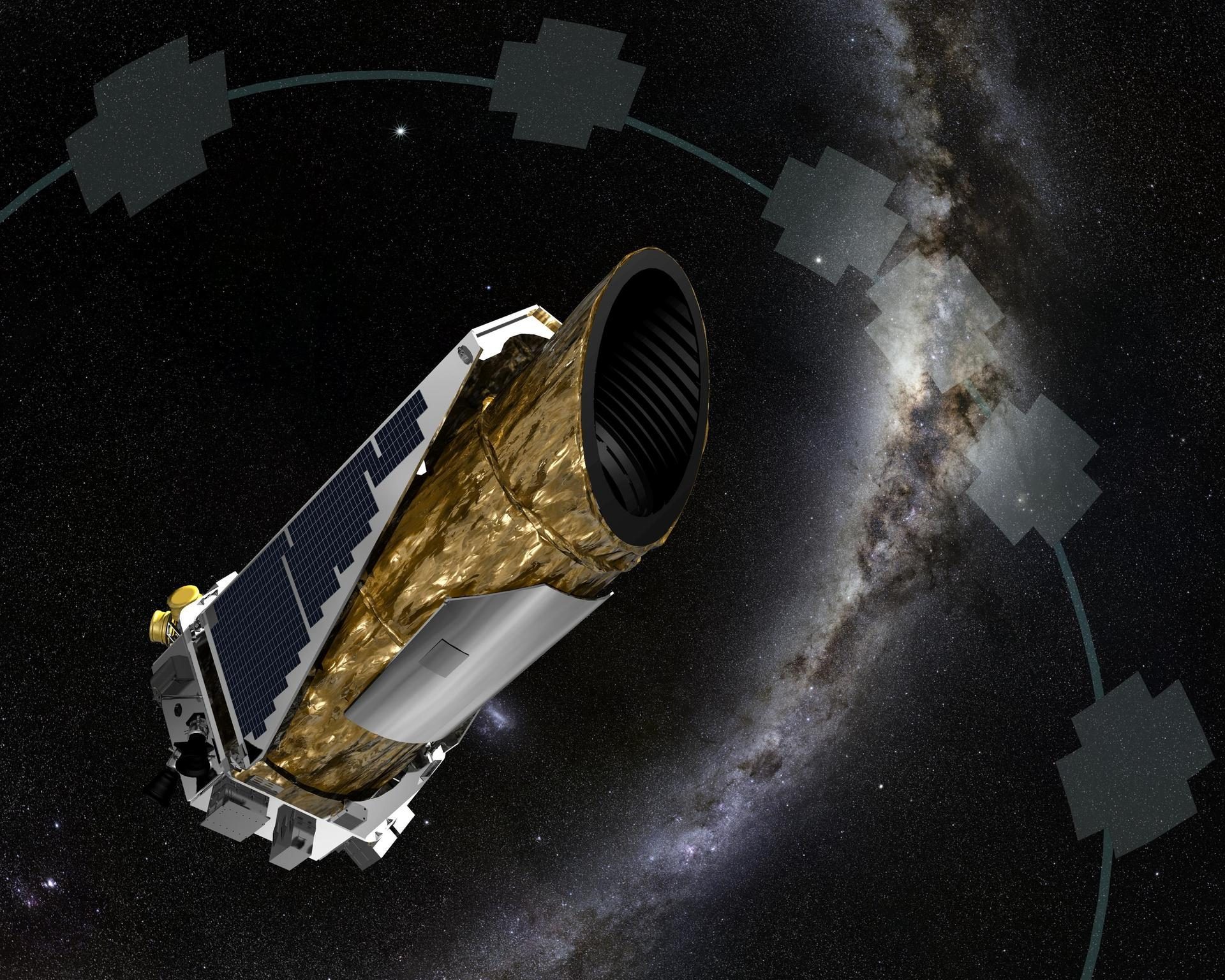
On March 7, 2009, a Delta II rocket lifted off from Cape Canaveral, Florida, carrying one of the most revolutionary instruments in astronomy history — the Kepler Space Telescope. Its mission was simple yet profoundly ambitious: to answer one of humanity's oldest questions — are there other planets like Earth in the universe?
An Unprecedented Survey
Kepler's design was elegantly ingenious. It used the "transit method," continuously monitoring the brightness of over 150,000 stars to detect the tiny dips in light caused by planets passing in front of them. The required precision was extraordinary — when an Earth-sized planet transits a Sun-like star, the star's brightness dims by only about one part in ten thousand. To achieve this, Kepler carried the most advanced photometer of its time, consisting of a 95-megapixel CCD array.
Unlike most astronomical telescopes, Kepler did not point at distant objects one at a time. Instead, it stared at a single patch of sky in the Cygnus and Lyra constellations, monitoring continuously for four and a half years. This unique strategy allowed it to discover thousands of exoplanets, including those orbiting within the habitable zones of their stars.
Revolutionary Discoveries
By the time its primary mission ended in 2013, Kepler had confirmed over 2,300 exoplanets, with thousands more candidates awaiting verification. These discoveries fundamentally changed our understanding of planetary systems: planets are more common than stars; most stars host at least one planet; small rocky planets are abundant throughout the cosmos; and solar systems like ours are not exceptional.
Among Kepler's most exciting finds were Earth-sized candidates in the habitable zone. Kepler-22b, Kepler-452b (nicknamed "Earth's cousin"), and the numerous small planets discovered during the K2 mission provided unprecedented targets for the search for extraterrestrial life.
Enduring Legacy
Kepler's primary mission ended in 2013 when the second of four reaction wheels failed, but its legacy continues to shape exoplanet science. The telescope's data archive remains one of the most valuable resources in astronomy, with new discoveries still being made by researchers mining its observations.
More importantly, Kepler set the stage for everything that followed. The K2 mission extended Kepler's life, the TESS mission continues the all-sky exoplanet survey, and the James Webb Space Telescope is now characterizing the atmospheres of Kepler's most exciting discoveries — including K2-18b. In this sense, the Kepler Space Telescope is not merely a historical instrument but the foundational pillar upon which modern exoplanet science is built.
The stars Kepler watched in Cygnus still shine, still host their hidden worlds. And among those worlds, 124 light-years away, a small blue planet called K2-18b waits patiently for us to learn its secrets — a world that would not have been found without the legendary Kepler Space Telescope.