📝 Editor's Note
While writing this article, I kept coming back to one question: if life on K2-18b were confirmed tomorrow, how would the world react? I don't think humanity is ready for that answer yet. But that's okay — we're already on our way.
— Admin
From Kepler's launch to JWST's detection of potential biosignatures on K2-18b, humanity has made breathtaking progress in exoplanet research. Yet this is only the beginning. In the coming decades, a new generation of observatories and space missions will search for signs of life among our cosmic neighbors with unprecedented precision.
Next-Generation Space Telescopes
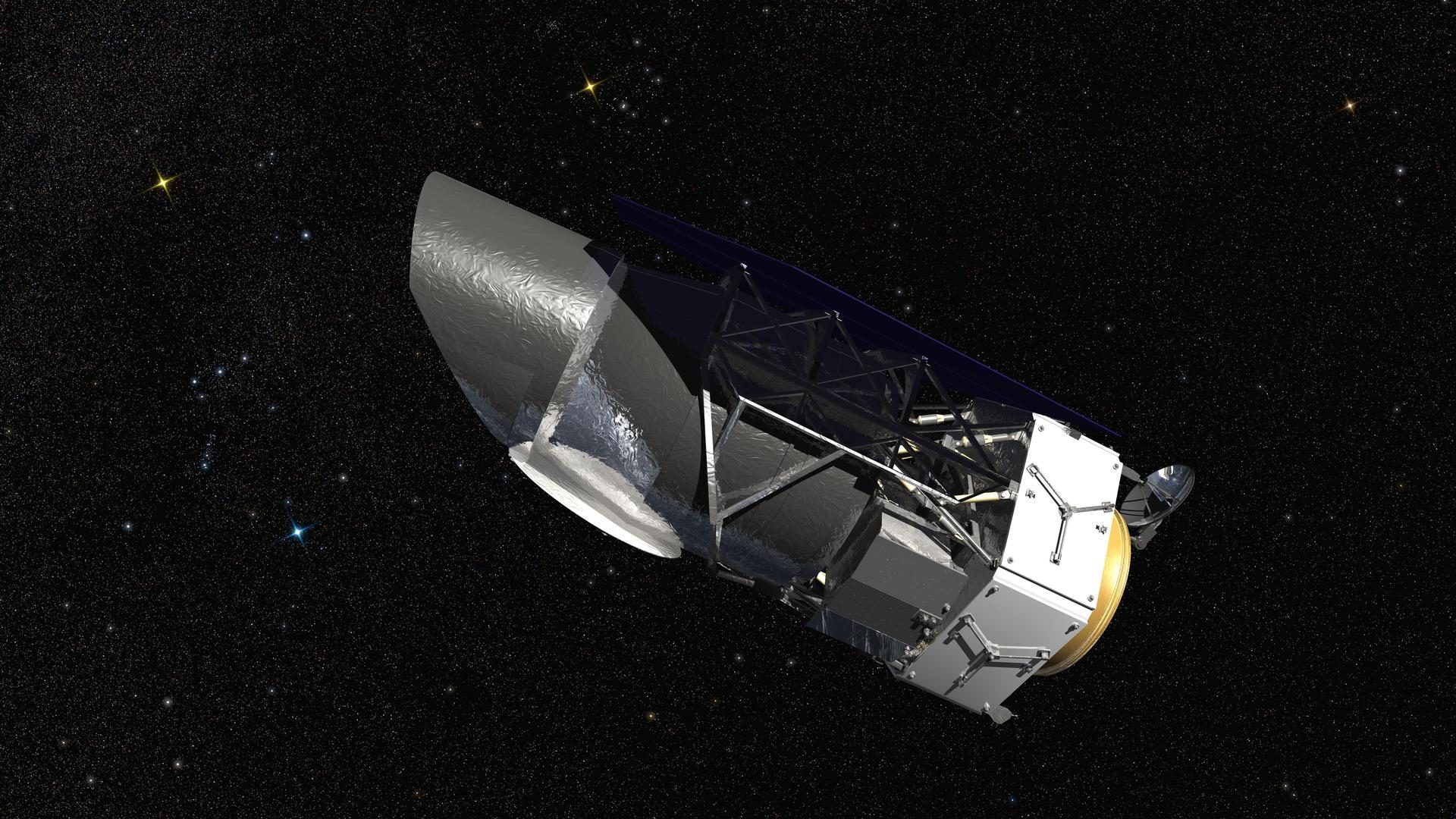
Beyond JWST, the astronomical community is already planning more powerful space observatories. NASA's Habitable Worlds Observatory (HWO) — evolved from the earlier LUVOIR and HabEx concepts — will be a UV-optical-infrared space telescope with an aperture exceeding 8 meters, specifically designed for direct imaging and characterization of Earth-like planets. HWO will be equipped with coronagraphs and starshades capable of blocking starlight to photograph planets the size of Earth.
ESA's ARIEL mission (launching 2029) will focus exclusively on exoplanet atmospheres. Unlike JWST's general-purpose design, ARIEL will analyze the atmospheres of approximately 1,000 known exoplanets, creating a large-scale planetary atmospheric census. This statistical sample will reveal what "normal" exoplanet atmospheres look like, making anomalies — potential life-induced atmospheric peculiarities — much easier to identify.
Ground-Based Super Telescopes
On the ground, the next generation of Extremely Large Telescopes (ELTs) is under construction in Chile's Atacama Desert. The European ELT (39.3-meter aperture), the Thirty Meter Telescope (30m), and the Giant Magellan Telescope (24.5m) will provide ultra-high spectral resolution that JWST cannot match. Their high-resolution spectrographs can resolve fine atomic and molecular line structures, enabling precise measurements of planetary radial velocity, atmospheric wind patterns, and rotation rates.
The ELT is expected to begin science operations around 2028. Its HIRES spectrograph will measure molecular abundances in K2-18b's atmosphere at sensitivities an order of magnitude beyond JWST's limits.
Searching for a True Second Earth
K2-18b is not strictly a "second Earth" — it is larger, with a thick hydrogen-helium atmosphere, likely an ocean world. True Earth analogs — planets with similar size, nitrogen-oxygen atmospheres, and liquid water oceans — will be characterized by the next generation of telescopes.
Looking further ahead, future life searches will extend beyond spectral signals. Conceptual missions like interstellar probes to the nearest stars (such as Proxima Centauri b) are already being imagined by scientists — grand plans requiring centuries to realize.
In the nearer future, K2-18b will remain a beacon of exploration. Whether or not it ultimately harbors life, it has taught us how to identify faint life signals amid data noise, how to maintain rigor and open-mindedness through scientific controversy, and how to expand one planet's story into a cosmic narrative. For this temperate sub-Neptune 124 light-years away, humanity's journey of exploration has only just begun.