K2-18b Explorer
A sub-Neptune hidden in the glow of a red dwarf, rewriting everything we thought we knew about habitable worlds.
🚀 Start Exploring ↓ Scroll DownPlanet Profile
Key scientific parameters for K2-18b
Timeline
From Kepler to Webb: The K2-18b Discovery Journey
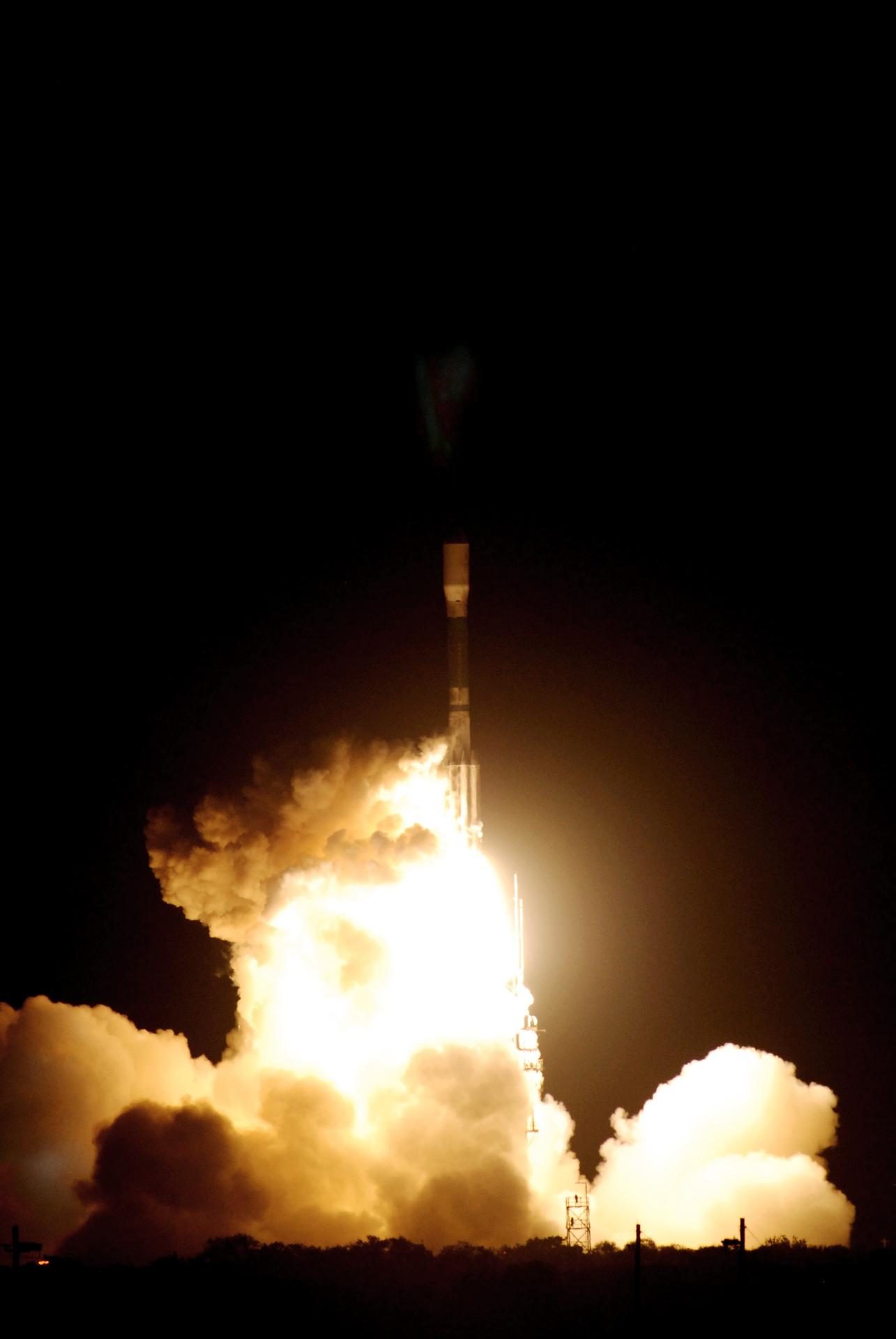
Kepler Launched
NASA successfully launched the Kepler space telescope, opening a new era in exoplanet discovery.
K2 Extended Mission
After reaction wheel failures, the Kepler telescope resumed operations in a new K2 mission mode.
K2-18b Discovery
Astronomers officially confirmed the existence of K2-18b using data from Kepler's K2 mission.
Sub-Neptune Classification
Scientists classified K2-18b as a sub-Neptune — a transitional planet between Earth and Neptune.
Hubble Water Detection
The Hubble Space Telescope detected signs of water vapor in K2-18b's atmosphere for the first time.
Water Confirmed
Multiple research teams independently confirmed water vapor in K2-18b's atmosphere.
JWST Launch
The James Webb Space Telescope launched from French Guiana, marking the dawn of a new era in infrared astronomy.
JWST Science
Webb transmitted its first scientific data, ushering in a new era of exoplanet atmospheric research.
DMS Discovery
JWST detected signs of dimethyl sulfide (DMS) in K2-18b's atmosphere, capturing worldwide attention.
Follow-up & Controversy
The scientific community conducted in-depth analysis and vigorous debate over the DMS signal.
New Observations
A new round of JWST observations of K2-18b has been scheduled, and scientists are eager for more data.
Future Prospects
Next-generation instruments like Euclid and the Roman Space Telescope will enable more precise observations.
Gallery
Explore artistic concepts and scientific visualizations of K2-18b
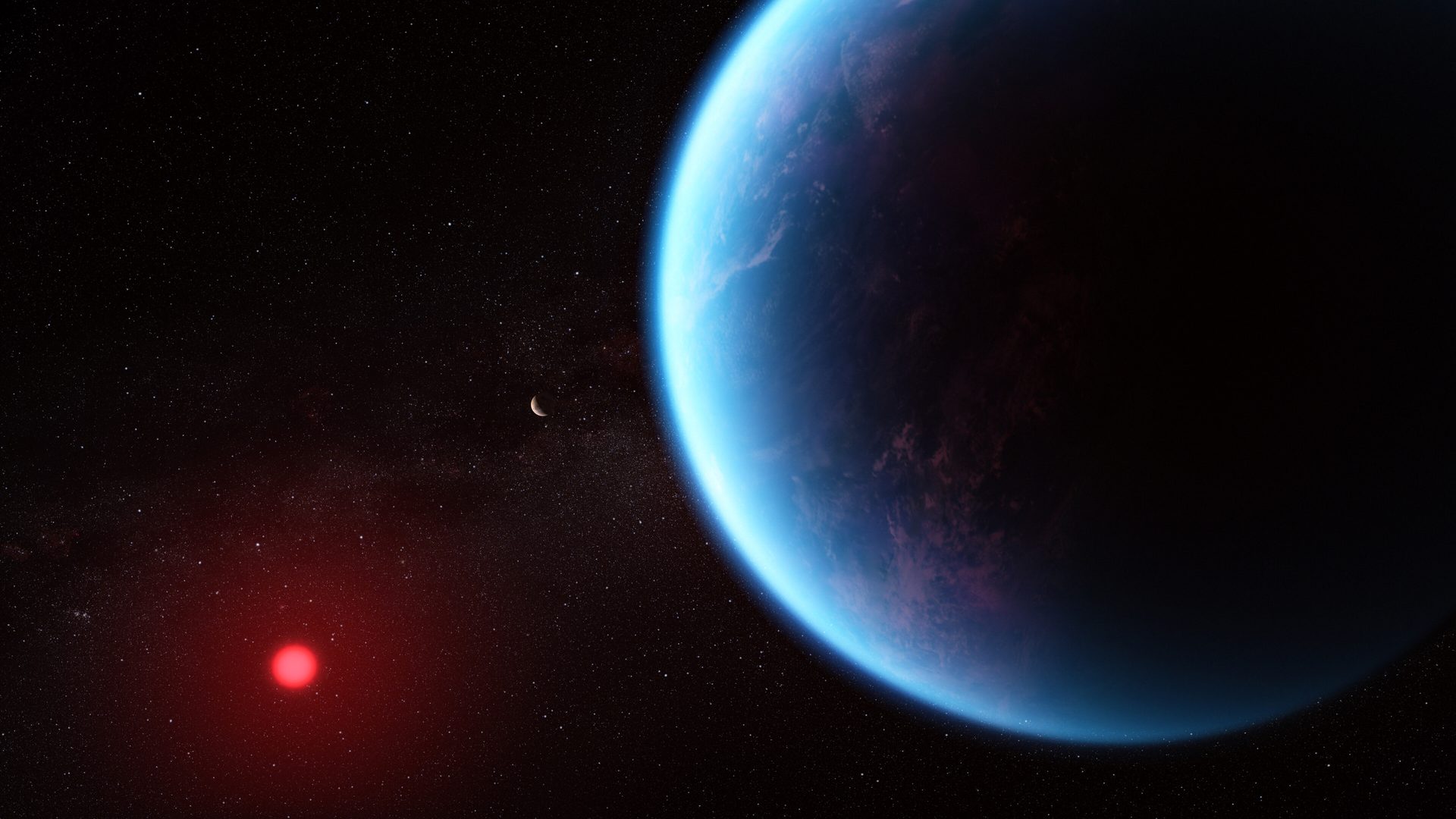
K2-18b Artist Concept
An imagined sub-Neptune surface landscape
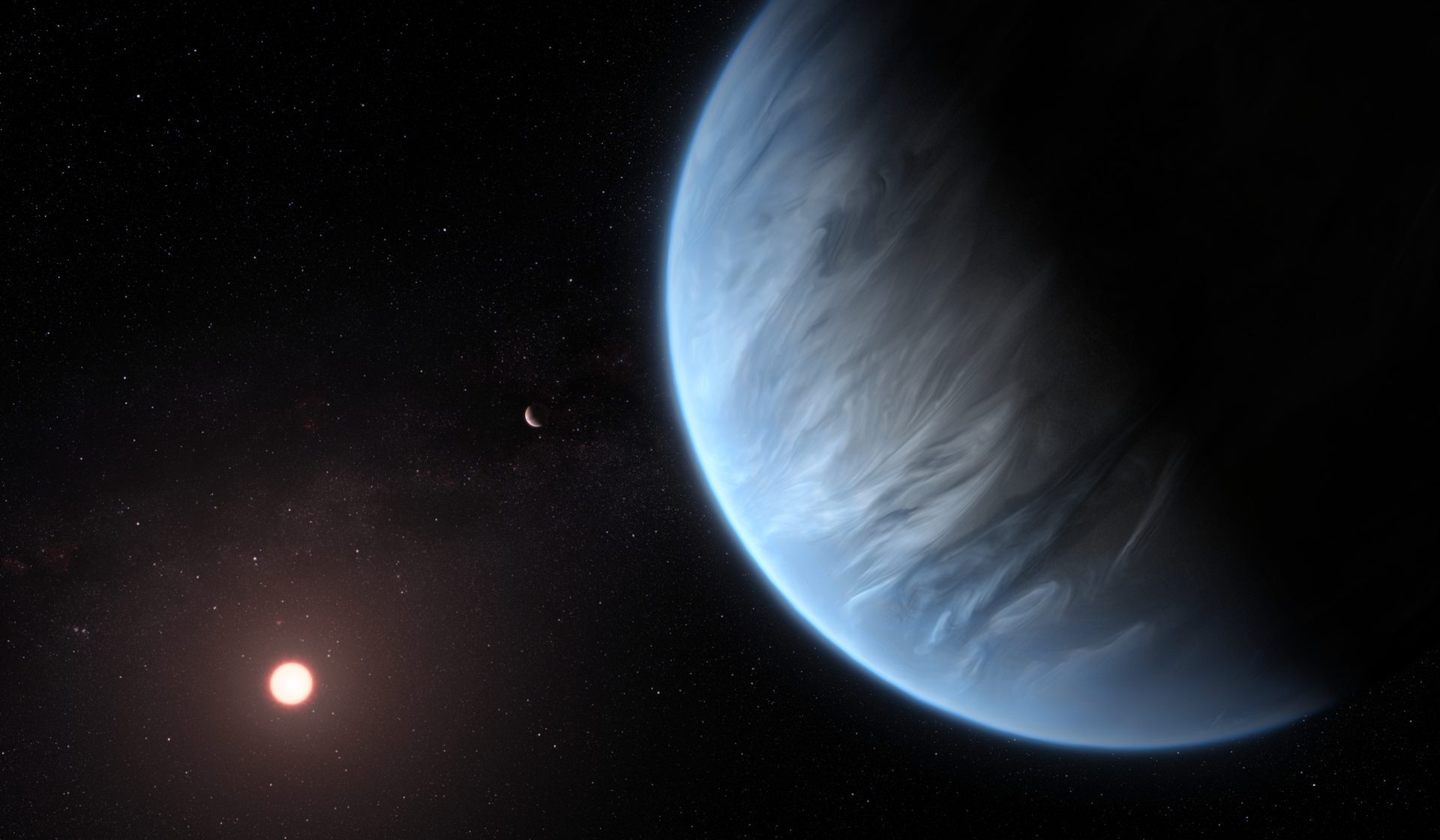
K2-18 Star System
The orbital relationship between red dwarf K2-18 and its planet
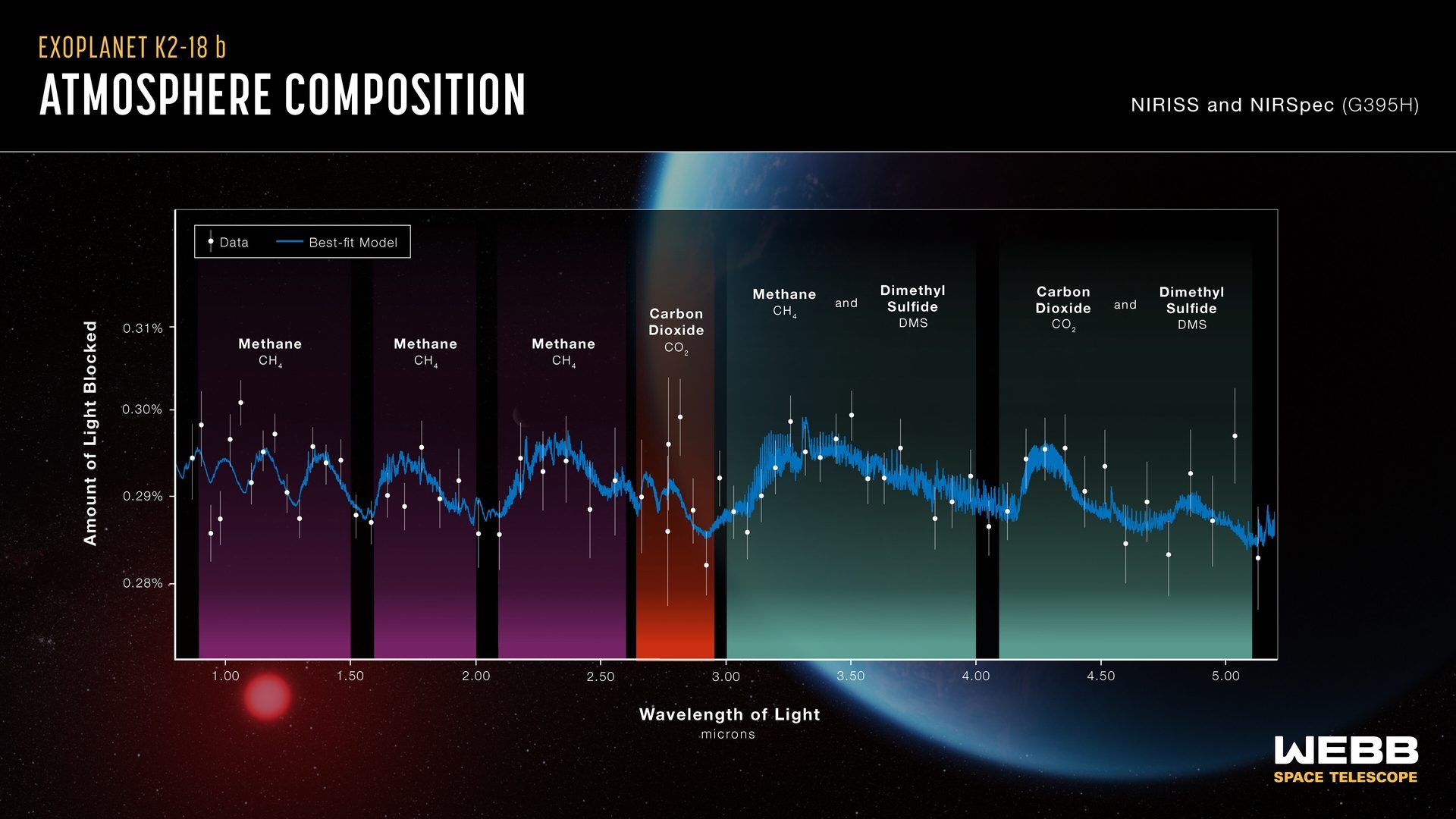
Atmospheric Spectrum Analysis
Transmission spectrum observed by JWST
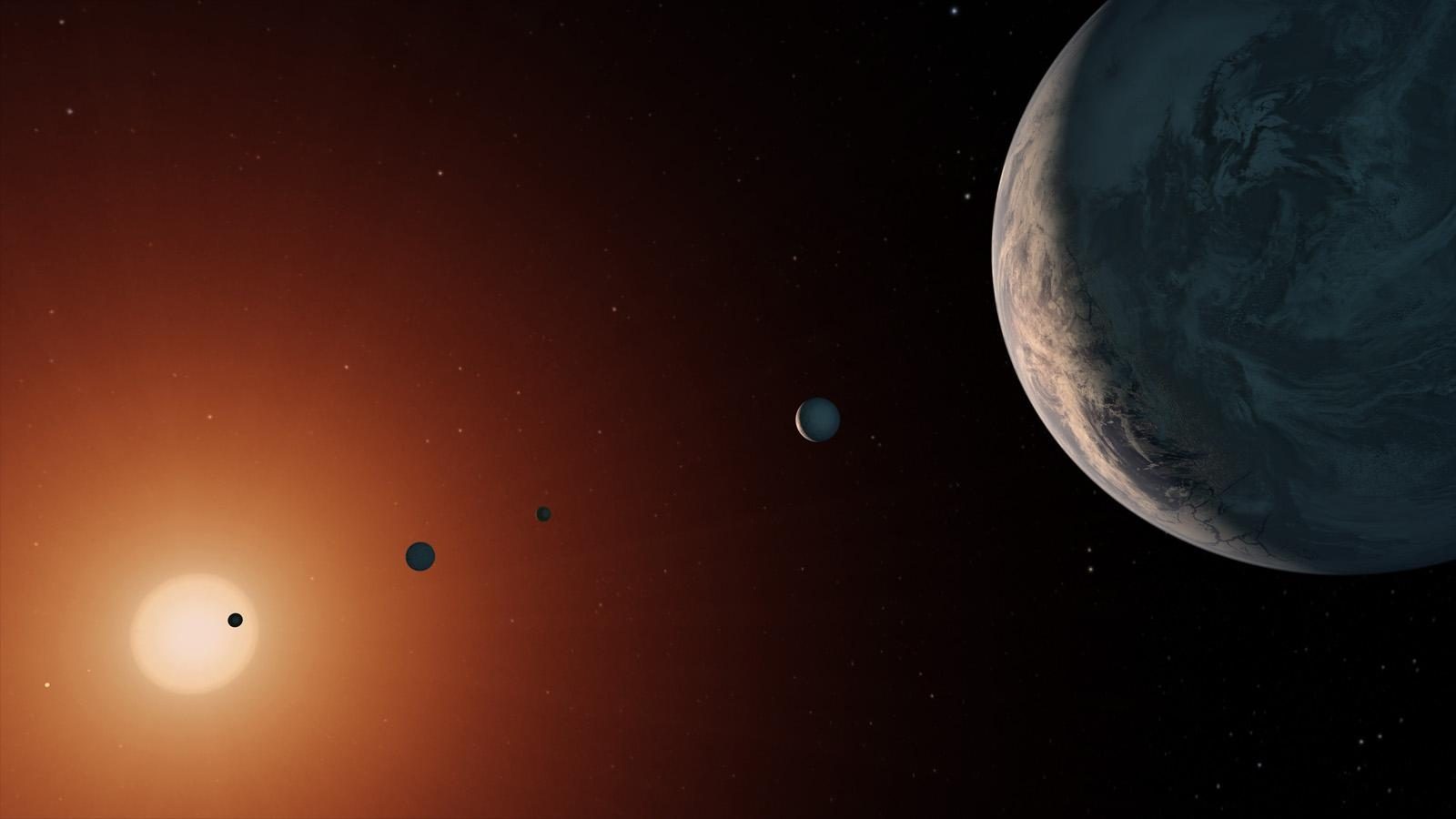
Habitable-Zone Systems
TRAPPIST-1: seven Earth-sized worlds around a red dwarf (artist concept)
About
Dedicated to sharing the latest scientific discoveries about K2-18b
This site is dedicated to communicating the latest scientific discoveries about exoplanet K2-18b to the public in an accessible way. From the launch of the Kepler telescope in 2009 to the landmark detection of dimethyl sulfide (DMS) in K2-18b's atmosphere by the James Webb Space Telescope in 2023, we have witnessed humanity's grand quest to find a second Earth.
All scientific data comes from publicly available research by authoritative space agencies including NASA, ESA, and CSA. If you have any questions or suggestions, please feel free to contact us.